Influencing the World for Christ: Why Medicine, Missions and Obedience Still Matter
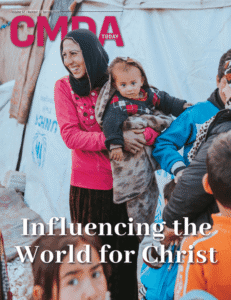
The air was thick with dust and diesel. Mothers sat on plastic chairs clutching feverish children. A teenage boy with a bandaged leg tried to look brave while his younger siblings watched his every move. There were no automatic doors, no electronic medical records, no overhead code announcements.
by Lina Abujamra, MD
I still remember the first time I walked into a refugee camp clinic.
The air was thick with dust and diesel. Mothers sat on plastic chairs clutching feverish children. A teenage boy with a bandaged leg tried to look brave while his younger siblings watched his every move. There were no automatic doors, no electronic medical records, no overhead code announcements. Just a long line of people who had lost almost everything and were hoping that maybe—just maybe—someone would see them, touch them and help them.
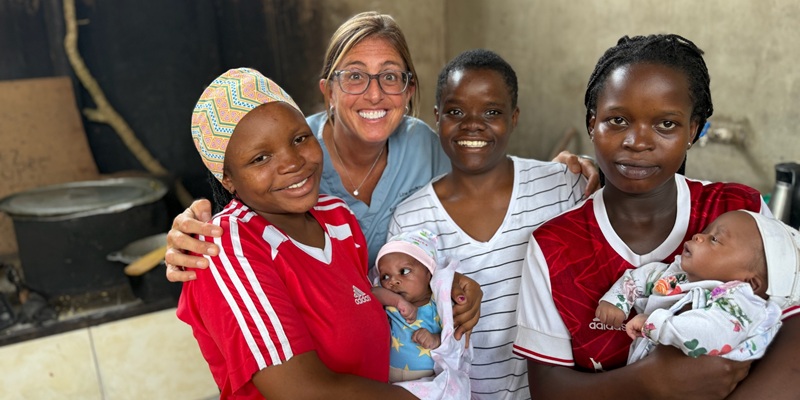
I was there as a pediatric emergency medicine doctor. I examined, I prescribed, I treated. As the day wore on, I realized what people needed most wasn’t only medicine. They needed hope. They needed someone to look them in the eyes and remind them they had not been forgotten by God.
In a way, I was seeing a reflection of my own story.
I grew up in Beirut, Lebanon, a city marked by sirens, explosions and uncertainty. My mother is a Palestinian refugee. Our family carries the memory of war, displacement and loss in our bones. Long before I stepped into a refugee camp as a physician, I had lived as the child of people who knew what it meant to flee, to start over, to wonder if anyone in the world cared.
That background has shaped everything about my calling. Healthcare has been my doorway into people’s pain, but Jesus has always been the reason I walk through it.
In this article, I want to share with you—as fellow Christian healthcare professionals—who I am, why humanitarian aid and discipleship have become central to my life and why I’m convinced it is critical for us to intentionally seek to influence the world for Christ, not in spite of our medical calling, but through it.
Who I Am and How God Led Me Here
I’m a pediatric emergency medicine physician by training, and I’ve spent most of my career on the front lines of acute care. The emergency room is its own kind of mission field—fast-paced, unpredictable and full of the entire spectrum of human suffering. Over time, God opened doors for me to step into telemedicine as well, caring for patients I would never meet in person but who still desperately needed expert care, compassion and wisdom.
Growing up in Beirut, I learned early that life can change in a moment. War does that. It strips away the illusion of control and exposes what we really trust. Watching my parents navigate fear and uncertainty, and seeing my mother carry the quiet strength of a woman who had already lost a homeland once, planted deep in me a longing to offer hope to people in crisis.
As an adult, that longing eventually grew into Living With Power Ministries, a teaching and relief ministry focused on bringing hope to people in crisis and equipping believers to live courageously for Christ in a chaotic world. Humanitarian work became a natural extension of that vision. It started with short-term trips and grew into ongoing relief initiatives among refugees and vulnerable communities—people whose stories felt strangely familiar to my own family’s story.
If you were to boil down my calling into one sentence, it would be this: I help people in crisis experience the hope of Jesus—through medicine, teaching and presence.
I suspect your calling isn’t so different.
You may be in a clinic, a dental office, an operating room, a university setting or a telehealth platform. You may be early in your training or nearing retirement. But if you belong to Christ, your story is ultimately about something larger than your CV, your specialty or your schedule.
Why Humanitarian Aid Became Central to My Calling
People often ask, “Why humanitarian aid? Aren’t there enough needs here at home?” The answer, of course, is yes. But for me, obeying Jesus has meant holding both local and global needs together, without pretending that one cancels out the other.
Humanitarian work became central to my calling for three main reasons.
- The Gospel Is Inherently Global
From Genesis to Revelation, the heart of God beats for the nations. God’s promise to Abraham was that “all the families of the earth” would be blessed through his offspring (Genesis 12:3, ESV). Jesus’ Great Commission sends us to all nations (Matthew 28:19). The final vision in Revelation is of a multiethnic, multilingual family gathered around the throne (Revelation 7:9).
As a physician who grew up in the Middle East, with a Palestinian refugee for a mother and a passport in my hand, I cannot read those passages and conclude that my only responsibility is to my own comfort and context. The faces in refugee camps are not abstractions to me; they look like cousins, neighbors, childhood friends. The more I listened to their stories, the more I sensed the Spirit whisper: “You have something they need. Will you go?”
- Suffering Exposes the Deepest Questions
Medicine brings us close to suffering; humanitarian work plunges you into the deep end. In refugee camps, bombed-out neighborhoods or makeshift clinics, the questions are rarely theoretical:
- “Where was God when the bombs fell?”
- “Why did my child die and not the others?”
- “Does God care about people like us?”
As Christian healthcare professionals, we don’t have to choose between alleviating physical suffering and addressing spiritual questions. Jesus healed bodies and preached the kingdom. He fed the hungry and called people to repentance. He wept at Lazarus’ tomb and then raised him from the dead.
Holistic care—care that touches body, mind and soul—is not a luxury. It’s our model.
- Our Training Is a Stewardship, Not an Achievement
It takes years to become a healthcare professional. The exams, the long nights, the training, the sacrifice—none of that is wasted. However, if we see our training only as a personal achievement instead of a sacred stewardship, we’ve missed the point.
Stepping into humanitarian work was my way of saying to God: “Everything you’ve invested in me—my medical skills, my cross-cultural background, my language abilities, my family story—I place them back in your hands. Use them however you see fit.”
That posture is not reserved for people who fly into crisis zones. Whether you’re performing surgery, managing chronic disease, filling teeth or teaching students, your training is a stewardship for the sake of the kingdom.
Why I Do What I Do
At the deepest level, the reason I do what I do is simple: Jesus is worth it.
He is worth the inconvenience of travel, the discomfort of sleeping on a thin mattress in a noisy camp, the emotional weight of hearing stories that sound like echoes of my own childhood. He is worth the awkwardness of speaking about faith in environments that may not welcome it. He is worth the risks, the fatigue and the nights when you wonder if anything you’re doing is making a difference.
There are biblical reasons that apply to all of us, wherever we practice.
We Are Ambassadors of Christ
2 Corinthians 5:20 reminds us, “…we are ambassadors for Christ, God making his appeal through us…” (ESV). For several of our patients, the healthcare system is a foreign land. They enter anxious, confused and afraid. As Christian healthcare professionals, we step into that environment not just as technicians but as representatives of the King—embodying His compassion, truth and presence.
We Are Called to Move Toward Suffering
The way of Jesus is to move toward the leper, not away. As clinicians, we already live closer to suffering than most people. Yet, it’s easy to protect ourselves by turning people into “cases” or “interesting pathology.”
Humanitarian work has been one of God’s ways of reminding me: These are not cases. These are image-bearers. You don’t need to cross an ocean to adopt that posture. You can do it in your clinic tomorrow.
We Are Part of a Larger Story
The kingdom of God grows like a mustard seed—small and often unseen. I’ve treated children whose names I no longer remember and prayed with mothers I’ll never see again. Still, I believe every act of love done in the name of Jesus becomes part of a much bigger story than we can see. The Spirit takes our loaves and fish and multiplies them.
Facing the Obstacles to Obedience
At this point you might be thinking, “That’s inspiring, but my life is already maxed out. How am I supposed to add ‘influencing the world for Christ’ to my to-do list?”
I feel that tension too. Obedience rarely happens in a vacuum. It happens in the middle of incredibly real limits, pressures and fears. If we’re going to take seriously our call to influence the world for Christ through healthcare, we have to be honest about what stands in the way.
For some of us, the biggest obstacle is fear—fear of safety if God were to send us to hard places, fear of financial instability, fear of reputational risk, fear of failure. Yet almost every calling story in Scripture begins with God saying, “Do not be afraid,” not because the circumstances are safe, but because He is with us (Joshua 1:9; Isaiah 41:10).
For others, the obstacle is time and exhaustion. You’re charting after hours, juggling family responsibilities or preparing for boards. The idea of adding anything—much less humanitarian work—feels impossible. Nevertheless, God can use small, faithful yeses woven into the rhythm of our lives: five unrushed minutes with a patient, a prayer whispered in the hallway, mentoring one student or saying yes to one stretch opportunity.
Then there is disappointment and cynicism. Maybe you once burned with passion for ministry or missions, but doors closed or people disappointed you. It’s easier now to stay safe, but God hasn’t written you off. Sometimes the detours are the very seasons that prepare us to carry more influence later without collapsing under it.
And many of us wrestle with family and calling. What does obedience look like when you have children at home, aging parents or a spouse with different risk tolerance? God doesn’t call us to sacrifice those He’s entrusted to us; He calls us to seek Him together and discern what faithfulness looks like now. Sometimes that means staying stateside. Sometimes it means inviting your family into the journey.
Through all of this, we must remember the next generation is watching us. Medical students, residents, young dentists, even our own kids are quietly asking, “Is Jesus really worth my whole life—or just what’s left over?”
They don’t need perfect mentors, but they do need real ones—people who choose obedience over comfort, faith over fear. Our daily choices become living curriculum for those coming behind us.
That heartbeat is what led me to write my new book, All Your Life: What It Really Means to Follow Jesus. It grew out of conversations with young adults who love Jesus but feel pulled in a hundred directions—career, success, identity, influence. The book explores what it means to give Jesus not just your Sundays or your spiritual compartment, but your whole life—your mind, heart, emotions, relationships and future.
My prayer is that as you and I wrestle honestly with our own obstacles to obedience, we’ll also be equipped to guide the next generation—to model for them what it looks like to say a daily, costly, joy-filled “yes” to Jesus.
Whatever your obstacles, the invitation is the same: bring them into the light of God’s presence instead of letting them quietly dictate the terms of your obedience. Ask Him, “Lord, given my fears, limits and responsibilities, what does faithfulness look like for me right now?” You might be surprised by how creative His answers are—and how many lives, including those of the next generation, are touched by your yes.
How You Can Step Into Your Calling Right Where You Are
My story is mine. Yours will look different, but the same Spirit who sends doctors into refugee camps is the Spirit who sends you into exam rooms, operating suites, dental chairs, classrooms and Zoom visits.
Here are a few simple ways to lean in:
- Reframe your daily work as mission.
Pray before your shift: “Lord, these are your patients. Use me as your hands and voice today.” Look for those “interruptible moments” to acknowledge fear, offer hope or pray. - Cultivate a theology of suffering.
Let passages like Romans 8, 2 Corinthians 1–5 and the Gospels shape how you talk about pain and hope. Good theology will keep you from both cheap answers and quiet despair. - Connect with others on the same journey.
One of the gifts of CMDA is community—people who understand this world. Find a local group, a mentor or a small circle of colleagues to pray and wrestle with Scripture together. - Take one concrete step toward humanitarian engagement.
Volunteer at a free clinic, partner with a church serving immigrants or refugees, join a short-term team or explore how your skills could serve ministries in crisis zones. Ask God to show you one next step. - Guard your own soul.
You cannot pour from an empty cup. Build rhythms of rest and Sabbath. Seek help if you’re carrying secondary trauma. Remember that your worth is not measured by how much you do but by what Christ has done for you.
When we live from grace instead of striving, influence becomes overflow, not burden.
A Final Word
If you’re reading this as a member of CMDA, I want you to know something simple and profound: your work matters.
He sees the days you feel like a hero and the days you feel like a failure. He sees the times you boldly speak His name and the times you walk away wishing you had said more.
And He still invites you—and me—to keep going. To keep showing up. To keep offering our training, our influence and our lives back to Him.
My hope is not in what I can accomplish through humanitarian aid or medical ministry. My hope is in Jesus—the One who stepped into our suffering, who healed the sick and forgave sinners, who died and rose again, and who will one day bring an end to all war and all tears.
Until that day, I want to spend my life influencing the world for Him—one patient, one refugee, one clinic, one conversation at a time.
I pray you will too.
About the Author
Lina Abujamra, MD, is a pediatric emergency room physician, now practicing telemedicine, and the founder of Living With Power Ministries. Known for her bold faith and down-to-earth honesty, she’s passionate about helping people connect biblical truth to everyday life. Whether through teaching, writing or podcasting, Lina brings hope to those wrestling with life’s hardest questions. When she’s not speaking or creating content, she’s providing medical and humanitarian aid in crisis zones like Lebanon and Uganda. Learn more at LivingWithPower.org.
Get Involved
CMDA is excited to announce Lina Abujamra, MD, will be a featured plenary speaker at the 2026 CMDA National Convention, April 23-26, in Loveland, Colorado. Join us for a time to renew your spirit, recharge your faith and connect with fellow believers in healthcare. To learn more and to register, visit cmda.org/natcon.